Zhejiang Robot Industry Association
Zhejiang University Robotics Institute
Golden Conference & Exhibition Group
Hangzhou Wisdom Source Exhibition Co., Ltd.
Hangzhou Sequoia Exhibition Co., Ltd.
Midsummer arrives along the Qiantang River. On May 14, 2026, the highly anticipated 2nd Hangzhou International Humanoid Robot & Robotics Technology Exhibition (referred to as the Hangzhou Humanoid Robot Show) grandly opened at Hangzhou Grand Convention & Exhibition Center.
Approved by the Ministry of Commerce and co-hosted by Zhejiang Robot Industry Development Association and Golden Summit Exhibition Group, the event takes "Reshaping the Full Industrial Chain of Embodied Intelligent Humanoid Robots" as its theme. Nearly 600 leading global enterprises, top research institutes and upstream & downstream industrial partners have gathered here to kick off a new chapter for 2026—the Year of Mass Production for Robots.
The opening ceremony kicked off at 10 a.m. amid a warm atmosphere. Government officials from Zhejiang Province and Hangzhou City, academicians, experts, representatives of international industrial organizations, and executives of global industry leaders including Tesla, Unitree, Agibot and DeepSeek Robotics attended the ceremony together.
Li Biqing, Executive Vice President of Zhejiang Robot Industry Development Association, delivered a speech: "2026 marks a pivotal year when humanoid robots transition from laboratory prototypes to industrialized mass production. As a hub for digital economy and smart manufacturing, Hangzhou is fully building a complete industrial ecosystem for humanoid robots. We hope this exhibition will accelerate breakthroughs in bottleneck core components and facilitate the wide deployment of embodied intelligence technologies in real-world scenarios."

Li Biqing, Executive Vice President, Zhejiang Robot Industry Association (ZRIA)
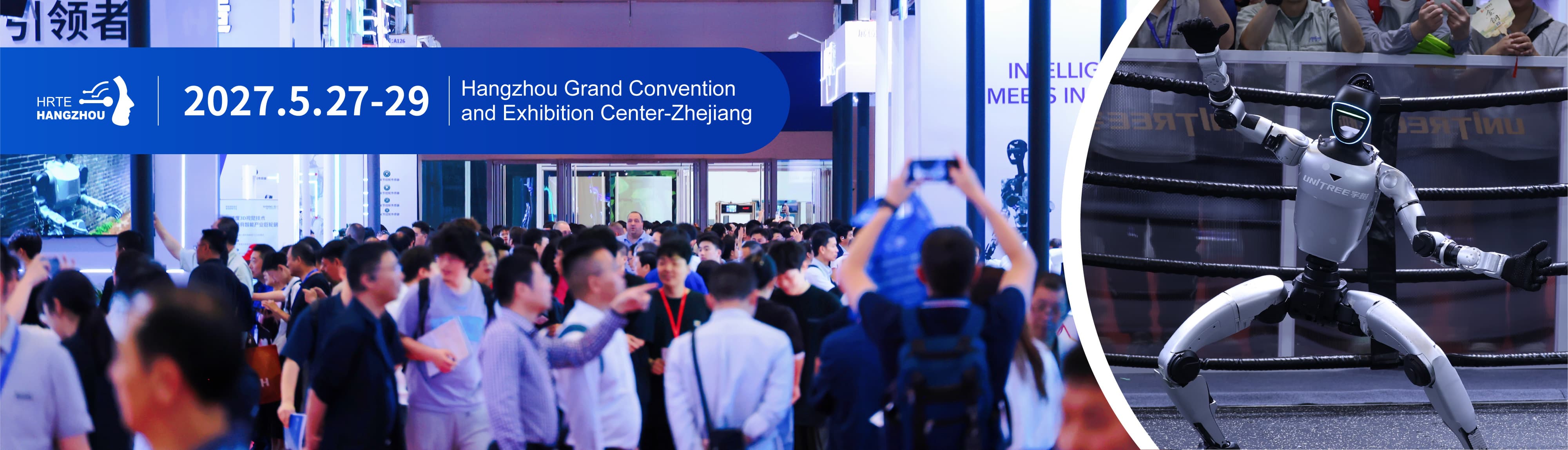
After the opening ceremony, distinguished guests toured the exhibition halls together. Covering a total exhibition area of 30,000 square meters, the venue drew throngs of professional visitors with a strong industry atmosphere.
Leading domestic and foreign humanoid robot manufacturers including Tesla, Unitree Robotics, Agibot and DeepSeek Robotics showcased their latest cutting-edge products side by side. Ranging from highly dynamic bionic robots to collaborative robots for industrial scenarios, their exhibits demonstrated impressive locomotion performance and interactive intelligence.
Meanwhile, a full lineup of supply-chain enterprises specializing in bionic actuators, joint modules, six-axis force sensors, AI computing chips and other core components also made appearances, presenting a complete picture of China’s self-developed humanoid robot industrial chain that is accelerating independent innovation.

The highlight of the show’s opening day was the industrial matchmaking event series "Ten Industrial Chains, Hundred Sessions, Ten Thousand Enterprises", led by the Department of Economy and Information Technology of Zhejiang Province.
At the event, industrial authorities of Zhejiang Province and Hangzhou City delivered in-depth interpretations of the latest supportive policies for the robotics industry, and released multiple demand lists featuring real application scenarios spanning smart manufacturing, commercial services, special operations and more.
A host of domestic and overseas enterprises signed agreements on industrial chain collaboration and global project cooperation on-site, marking that coordinated development between upstream and downstream industry players has entered a substantially accelerated phase.

The exhibition also hosted exclusive dedicated matchmaking sessions for China-Japan and China-South Korea robotics industrial chains. Procurement delegations from Japan and South Korea held closed-door negotiations with Chinese core component suppliers and system integrators. With clear demand specifications, the sessions delivered highly efficient matches that won wide praise from both sides. A South Korean buyer commented: “China has achieved rapid progress in humanoid robot joint modules and sensors. We aim to secure long-term partners right here.”
Beyond professional exchanges, dynamic robot demonstrations and popular science interactive activities open to the public drew crowds of visitors. Attractions included sprinting and leaping bionic robots, precise object handling by humanoid robots, and multi-robot cooperative performances. Many teenagers stopped to experience the cutting-edge tech at engaging booths blending innovation and fun, creating a lively atmosphere. Organizers stated the expo is built as an integrated platform for professional communication, commercial cooperation and science popularization, bringing humanoid robot technology closer to the general public.
Preliminary statistics from organizers show the opening day welcomed over 25,000 professional attendees, with more than 100 media outlets worldwide covering the event on site. In the following two days, additional targeted global industrial chain matchmaking events will be held covering China-US, China-EU, Middle Eastern and Southeast Asian markets, alongside numerous technical launches and thematic forums.
A defining shift of this year’s show is its focus from tech showcases to practical industrial solutions. Yang Jianzhuang, person in charge of Golden Summit Exhibition Group, remarked: “We stand on the eve of large-scale commercialization for humanoid robots. What unfolds at Hangzhou Grand Convention & Exhibition Center is far more than an exhibition — it marks the reshaping and new takeoff of an entire industrial chain.”
All stakeholders across the global robotics industrial chain are warmly invited to continue following and participating in this grand event. Let us seize the historic opportunities of 2026, the Year of Mass Production for Robots, and jointly propel the humanoid robot industry in China and worldwide into a new era of large-scale commercial deployment.